Other apps count your screen time. We change your relationship with the urge.
Blockers fight the symptom, the hours. Urge Surf works on the cause: the craving itself, the moment it hits.
We own the urge.
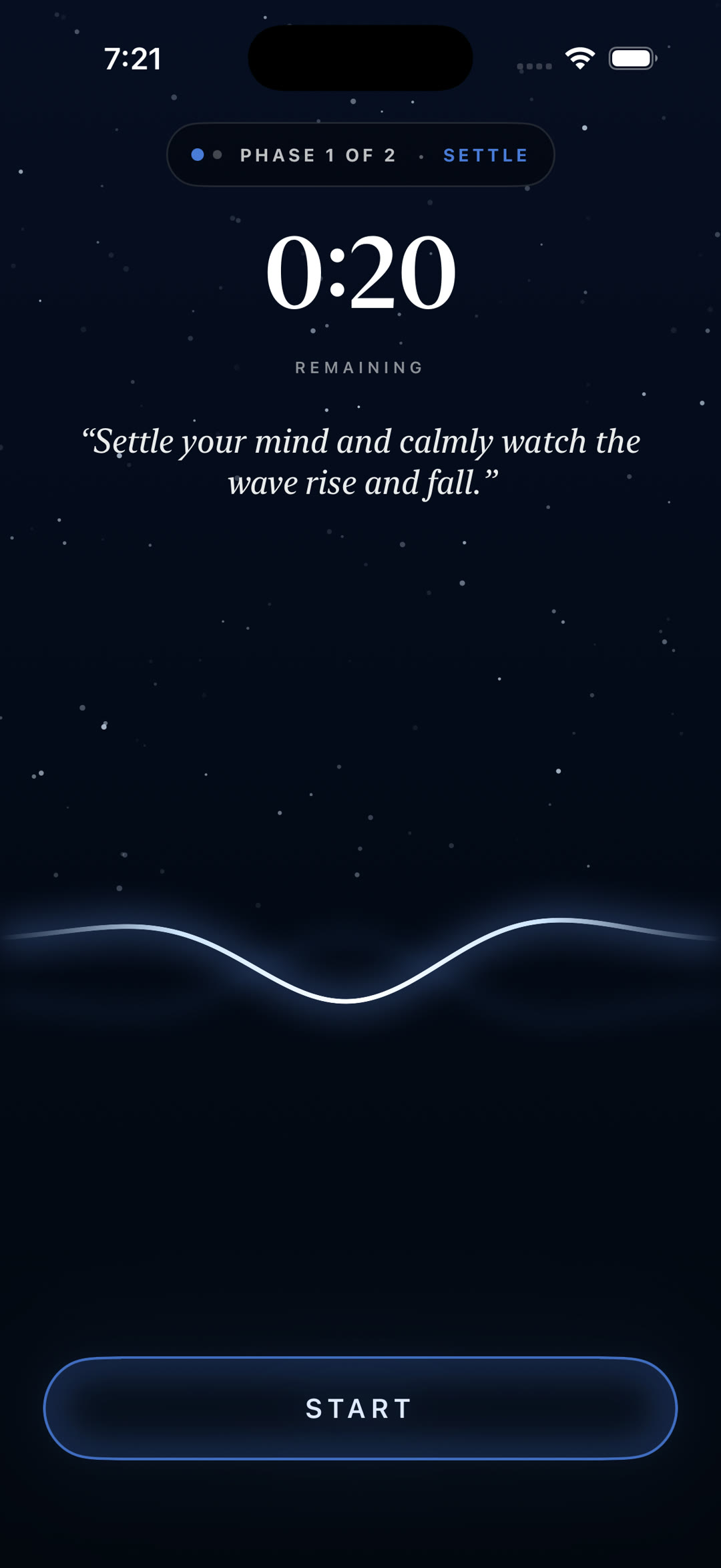
The craving is the whole game. No other app does anything with that moment. Instead of white-knuckling it, you surf it: settle, breathe, and watch it crest and fall. It’s real urge-surfing psychology, and it’s a skill. Every wave you ride makes the next one quieter.
Why, not how much.
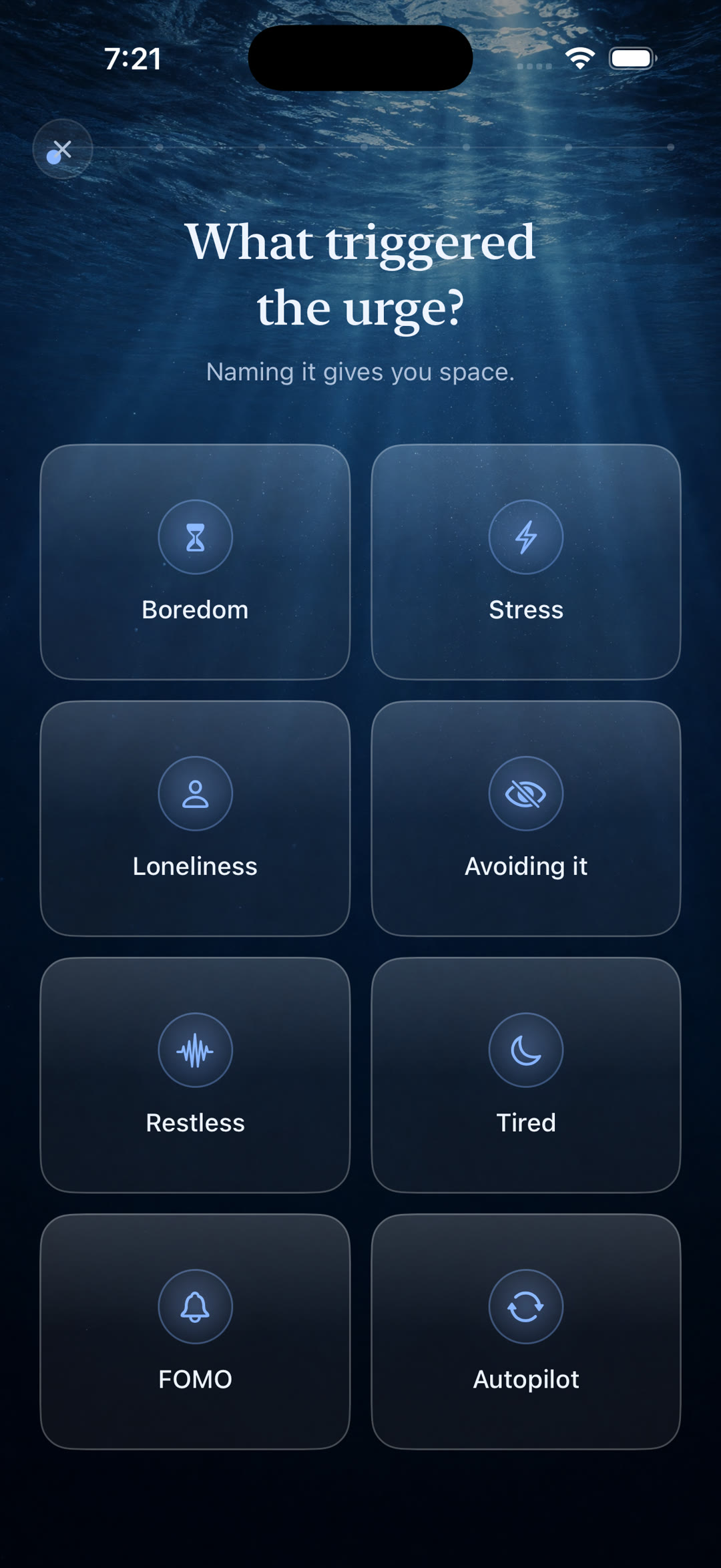
A screen-time number tells you that you failed. It doesn’t tell you why. Urge Surf asks what’s underneath each urge: bored, anxious, lonely, avoiding something. Naming the feeling loosens its grip, and the pattern it reveals is what actually changes how you act. No shame, no leaderboard of lost hours.
It ends off the phone.
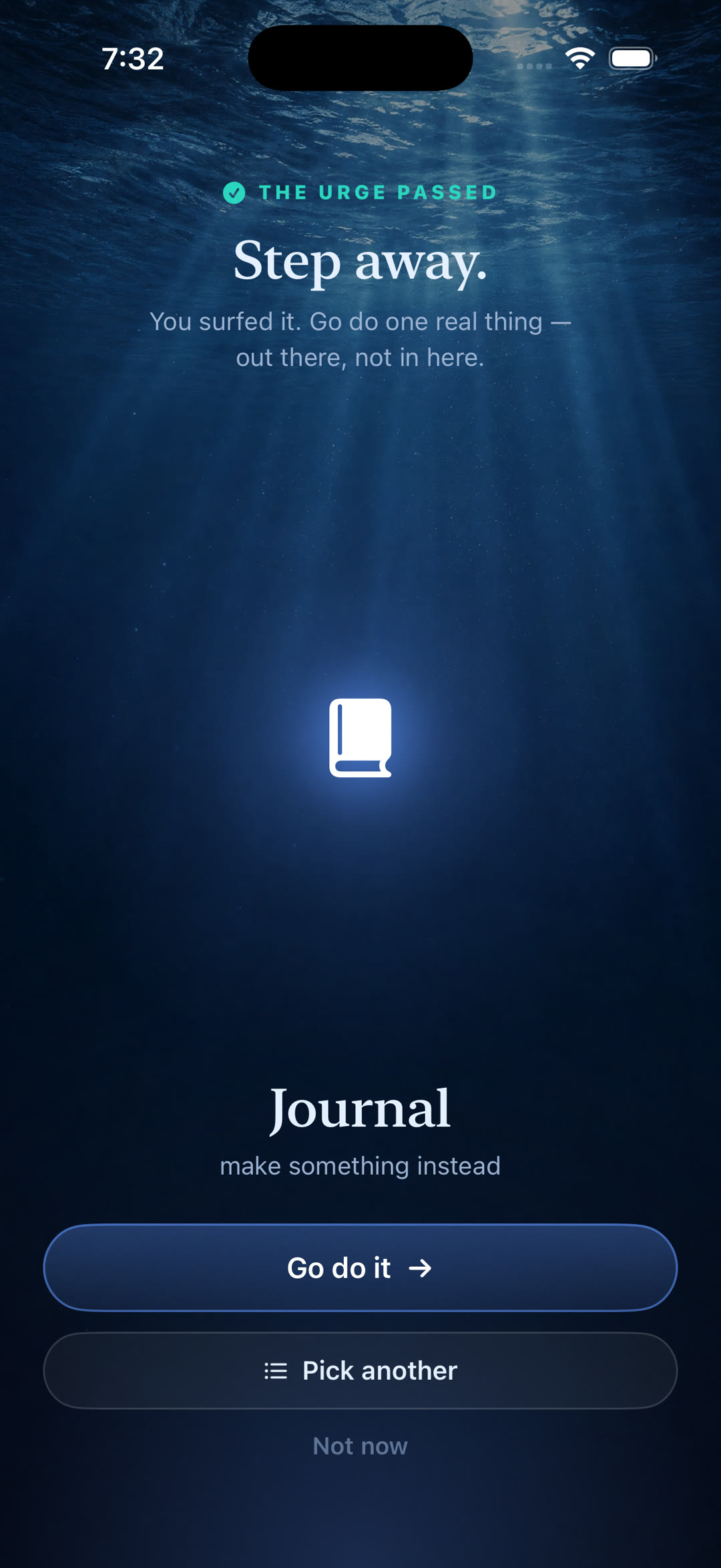
Most blockers keep you managing your phone, on your phone. Urge Surf does the opposite. The second the urge passes, it points you to one real thing to do instead, out in the world. The goal was never a better screen. It’s a life with less screen in it.
Built on what actually works.
Urge Surf isn’t a hunch. Every part of it traces back to real research on cravings, attention, and habit.
Urges rise, peak, and pass like a wave. You don’t have to fight one. You just have to outlast it.
The focus you lose after a single distraction. That’s the real price of “just one glance.”
How quickly cutting back eased anxiety and loneliness in a controlled study.
Times the average person touches their phone every day. The urge is a reflex, so we interrupt the reflex.
Feeds run on variable rewards, the most addictive schedule in behavioral science. Willpower doesn’t stand a chance. A system does.
Most scrolling is emotional avoidance: reaching for the phone to escape a feeling. Name it and it loosens.
Urge Surf vs. a typical blocker.
A typical blocker
- ✕ Counts the hours you’ve already lost
- ✕ Blocks the app, until you tap “ignore”
- ✕ Leaves you managing your phone, on your phone
- ✕ Shames you with a screen-time number
Urge Surf
- ✓ Rides the urge out in 60 seconds
- ✓ Shows you why the urge came
- ✓ Ends every urge off the phone
- ✓ Builds a skill that compounds over time